Basics of Content Marketing : Scale your Business with Effective Content Marketing Strategy

What is Content Marketing?
Content marketing is a way to get traffic to your website using multimedia rich and shareable content in order to generate leads and build relationships with prospects. A good content marketing strategy is an absolute must in this modern era of marketing.
Different types of content categorization:
- Blogging, which can happen on your own site (“owned media”) or involve guest blogging for other publications, and can include text, images, infographics and videos
- E-books or white papers, which are often used as lead magnets to capture information like a user’s email address
- Email newsletters, which can build relationships with readers and encourage them to head back to your site
- Webinars and other video content, which can help you convey your brand personality and increase user engagement (especially since video has become very popular)
- Landing pages, which are hosted on your own site and direct users to click a button to find out further information or conversion
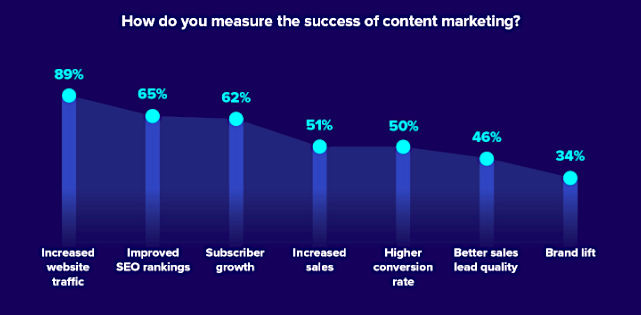
Great content is pretty useless without a strategy behind it, and this is the biggest marketing mistake that brands consistently make.
A successful content strategy is carefully created, documented and executed without deviation. Yet a lot of marketers still don’t have a content strategy at all — or don’t have a documented strategy, believing that a vague idea of where they’re heading will suffice. In this competitive era, it won’t.
Here’s how to create a content marketing strategy that will work.
1) Define Your Goals
Content marketing can help you accomplish a number of very different goals. The key is to know which goals you’re trying to hit — in other words, what you want your content marketing to actually do.
It goes without saying that for most brands, the ultimate goal will always be to get more customers and more sales. Different strategic goals that you can focus on include:
- Driving immediate sales
- Getting more traffic to your site through social shares or SEO
- Improving the overall SEO of your site with a UX review, optimized content, improved CTAs, backlinks, etc.
- Building brand awareness
- Establishing yourself as an industry expert or thought leader
- Generating new leads
- Increasing the number of email subscribers
- Boosting on-site engagement
Your content marketing strategy can take any or even all of these goals into account, but it’s important to note what exactly you want to accomplish with both your overall strategy and each individual piece of content so that you can optimize for it. It's a good idea to start with one or two goals and then change them or branch out once you've seen some good ROI.
2) Set Your Content Marketing KPIs
Key Performance Indicators (KPIs) are the essential metrics that you’ll watch in order to evaluate your progress towards your goals. These need to be specific, measurable metrics that can clearly demonstrate progress.
For example, if boosting lead generation is your number one goal, you’ll likely use a high-value piece of content like an e-book, and stick it behind a data capture form. In order to download the e-book, prospects will need to give you some data — usually name, job title, and email address.
In this case, your KPI could be “number of downloads” of that e-book. Set a realistic target for this metric (say, 100 per month) and if you hit it, you can be confident that your tactic has taken you further towards your overall goal of gathering 100 more leads per month.
The KPI can be sales, traffic, leads, on site engagement or a combination of these.
3) Optimize Your Content
For every single post that you write, infographic that you design or video that you create, you should have one specific goal in mind for it. That makes it much more efficient to optimize and make it more appealing. Do A/B testing and find out the best.
Optimizing means making your content Adaptable.
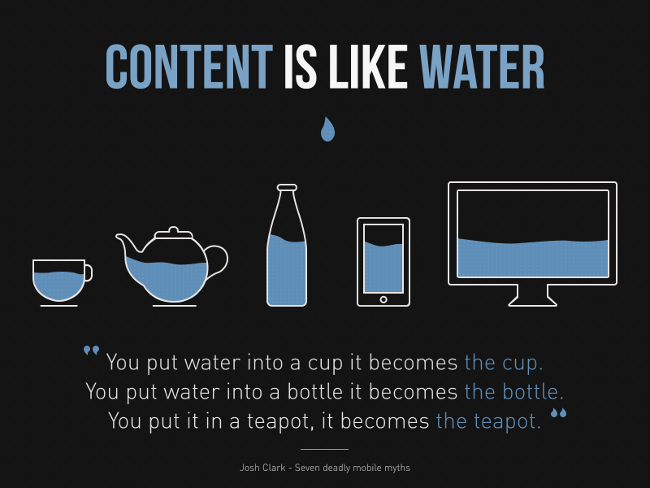
A content can be optimized by adding proper paragraphs, call to action, hyperlinks as needed, referenced, images etc.
Similarly, a video content can be optimized based on the video and voice quality, design elements used and clarity of information which is presented.
A infographic can be optimized based on the color preferences and illustrating the information in a creative way. Similarly, we have to think of strategies to optimize Emails, SMS, brochures etc.
4) Choosing a Distribution platform
5) Measure your Results
Once your content marketing strategy is up and running and you’re publishing new posts, videos and lead magnets, it’s time to implement the KPI tracking you’ve set up so that you can see how you’re progressing towards your goals. Use Google analytics and various other tracking channels to see which are the top performing content and where is the scope for improvement.


Comments
Post a Comment